Tuesday, April 7, 2015

Top 10 CPAP Masks - Part 1 - Nasal Pillow Masks

Comprehensive Review of CPAP Nasal Pillows, Nasal Masks, Full Face Masks


As manufacturers continue to churn out more and more CPAP mask offerings, attempting to find the Holy Grail of masks becomes both easier and more challenging for users.


Easier, because the greatest CPAP mask you have ever tried is out there, somewhere, waiting for you to discover it. More challenging because of the Paradox of Choice, AKA analysis paralysis. So many choices, and obviously you want to choose wisely.


To help you overcome analysis paralysis, we compiled data from over 1,000 actual CPAP users and assigned a score to each mask. The pros and cons listed are the most frequently mentioned features which users liked or disliked. Obviously, this creates a sometimes-contradictory list; but since CPAP mask comfort is subjective by nature, we decided this was the best way to provide the pros and cons.

We have remained objective while compiling this information, and no personal preferences are presented. We purchase (and use) all of the masks represented here. 

In part 1 of this 3-part series, we'll look at the very popular nasal pillows category. In the coming weeks, we will publish the findings from the nasal mask and full face mask categories.

So, let's dive in and see which are the top nasal pillow CPAP masks.


Respironics Nuance CPAP Mask

This one surprised me a bit, as I expected the Nuance to score significantly higher. Several people on our clinical staff like this mask very well, and we have not seen a high return rate for the Nuance. Sean mentions that the pillows are very comfortable, each side can be tightened independently, but the exhalation is (subjectively) noisier than other choices.

Pros:
  • Lightweight, easy to put on, comfortable, headgear doesn't slip, less likely to leave marks on face
Cons:
  • Does not maintain seal, pillows difficult to adjust, presses too hard between nostrils and upper lip, short tube has excessive movement

Score: 80.4%


9. GoLife by Philips Respironics - Price $59.95
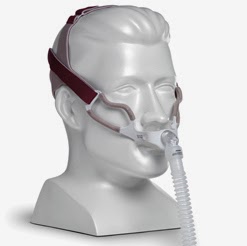

Respironics GoLife CPAP Mask


Another (lesser) surprise, as we assumed that the Nuance would score well ahead of the aging GoLife and GoLife For Women platform. We do not use this mask locally very often as of late; but, as is often the case, it has a loyal group of people who like it and continue to use it.

Pros:
  • Doesn't leak, lightweight, stays in place
Cons:
  • Difficult to get a seal, leaks, does not stay in place, leaves marks on face, hurts nostrils

Score: 82.5%


Puritan Bennett Breeze CPAP Mask


Yet another small surprise. The venerable (read: ancient) Breeze SleepGear has been around for many years, and continues to have an almost cult-like following. This is the original nasal pillow CPAP mask (actually the ADAM Circuit preceded the Breeze, but it was the precursor to the Breeze), and has seen only a couple of design changes over it's lifetime. It is prone to breaking, is relatively heavy, and the replacement pillows are on the expensive side. The killer feature for many users is the fact that nothing is in contact with their face, save for the actual nasal pillows. 

Pros:
  • No leaks, good for side sleepers, nothing touching the face
Cons:
  • Very fragile hose guide, heavy, noisy

Score: 83.2%


7. Swift II by ResMed - MSRP $118.00

ResMed Swift II CPAP Mask


Here we have another older design, which has seen minor updates over the years. It was a dominant player when first introduced, as it was the first foray into nasal pillows by ResMed. 

As with other "legacy" type masks, many of us may think that there are better choices. Much like the Breeze, however, the Swift II has a large fan base and will likely continue to be relatively popular for many years to come.

Pros: 
  • Easy to put on, no leaks, unobtrusive
Cons: 
  • Side straps uncomfortable, headgear slips, not a good choice for side sleepers, exhalation ports are not well diffused

Score: 84.0%


Fisher & Paykel Pilairo Q CPAP Mask


Here is one that landed on the list at about the position I expected. The Pilairo Q is a solid entry for Fisher and Paykel; it has several features which set it apart from the competition. The Pilairo Q also possesses a few quirks which detract from what could be a very strong player in this crowded field.

Pros:
  • Very quiet, stays sealed, lightweight, good for users with facial hair
Cons:
  • Headgear not adjustable enough, leaks excessively, "One Size Fits All" does not fit all

Score: 85.9%


5. TAP PAP by Airway Management - Price $97.99
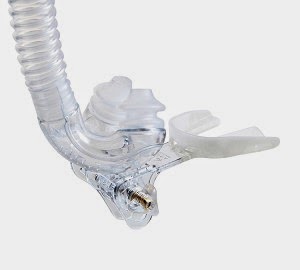
Airway Management TAP PAP CPAP Mask


This mask scored very well overall, and also generates the strongest reactions from people who have used the TAP PAP. The adherents love it, and the users who disliked it really disliked it. 

The most frequently mentioned feature by both the lovers and the haters is the mouthpiece. Which makes sense, as that is the feature which sets the TAP PAP mask apart from the rest of the pack. 

This is truly a love-it-or-hate-it mask, and it is absolutely unique in this (or any) segment of CPAP masks.

Pros:
  • No lines on face, no headgear to adjust (headgear is optional), very quiet, good for side sleepers, good for users with facial hair
Cons:
  • Mouthpiece uncomfortable, makes teeth sore, pressure on teeth

Score: 88.9%


ResMed Swift LT CPAP Mask

The Swift LT was the second nasal pillow CPAP mask to be released by ResMed, and represented a marked improvement over the Swift/Swift II. With the LT, ResMed addressed many of the criticisms of the original Swift (aside from their insistence on bestowing confusing names upon every product). 

The LT, which stands for Light Touch, was another monster upon it's release, and continues to sell relatively well. Especially when you consider that the ResMed family of masks is a monster unto itself, with consistently better products being offered every year. 

The Swift LT is still preferred by some ResMed fans, many of whom have tried the newer (better?) versions and found them lacking in important areas.

Pros:
  • Comfortable and quiet, great seal, good for users with facial hair
Cons:
  • Leaves marks on face, leaks, noisy

Score: 89.1%


ResMed Swift FX CPAP Mask


What??? Third place? The Swift FX can't possibly be rated in third place!

Yes, I too was stunned when the numbers were crunched (and re-crunched) and the long-time favorite of millions of CPAP users was relegated to position 3.

OK, how did this happen? A closer look at the numbers reveal that the Swift FX is loved for it's minimalistic design, light weight, great seal, and a multitude of other great features. It also drew some sharp criticism over the inability to actually adjust the position of the nasal pillows. There are enough people who purchased this mask and were not happy with it to drag down it's overall rating. This also means it was somewhat a victim of it's own success, with buyer expectations set so high that perhaps it was inevitable for it to get taken down a notch or 3.

When all is said and done though, the Swift FX (and it's sister, the Swift FX For Her) is still our best-selling nasal pillow CPAP mask. It outsells the previous seven masks in this article combined. It is a force to be reckoned with, and many a user will continue to use this mask for the next 10 or 20 years. I fully expect it to have a lifespan akin to the Breeze, with legions of users choosing this mask over newer, flashier rivals.

The Swift FX is in a class of it's own, even if it did only win Bronze in this particular comparison.

Pros:
  • Very comfortable, quiet, lightweight, no leaks, very soft pillows, high quality, good for back and/or side sleepers
Cons:
  • Strap at base of skull rides up, side straps are hard, air leaks on face

Score: 89.7%


2. AirFit P10 by ResMed - MSRP $99.00


ResMed AirFit P10 CPAP Mask


The latest, greatest nasal pillow CPAP mask from the company generally regarded as the manufacturer to beat, the AirFit P10 and AirFit P10 For Her. 

This was possibly the most anticipated CPAP mask in recent memory. When ResMed releases a new mask it is an event, and it is usually a home run. No question the P10 is a knockout mask. It has all of the requisite features (lightweight, simple to adjust, seals great). That being said, why is it in position number 2? 

Well, ResMed has to fight really hard to maintain its dominance. Many users, as well as many suppliers, feel that ResMed abuses its position by charging more than their competitors. The market is very efficient though, and users are typically going to purchase the best mask, even if it costs more.

ResMed wisely lowered the price of the P10, allowing it to better compete with lower priced alternatives.

That really does not explain the P10 taking Silver in this comparison. We'll go into more detail when we arrive at position 1. For now, lets just agree that the P10 is a fantastic mask, and will serve many users very well for many years to come.

Pros:
  • Lightweight, easy to adjust, simple to clean, minimal headgear, very small, stays in place, exceptionally quiet 

Cons: 
  • Headgear stretches with use, difficult to exhale (ResMed's response is that the perceived difficulty exhaling is simply user perception and is not supported by the test data)

Score: 91.3%


1. Aloha by RespCare - MSRP $79.50

RespCare Aloha CPAP Mask


What kind of sham is this? Does someone on the staff have an interest in RespCare? How does an upstart manufacturer dethrone the great and powerful ResMed?

All valid questions. First, let's start off by noting that the Aloha took Gold in this comparison by a very small margin, which is exactly what should occur in any comparison of the best. Second, let's also note that far, far fewer people actually purchase this mask than many of the masks on the list. This is not to diminish the fantastic showing of the Aloha, but simply to determine the reason for what may be construed as an anomaly. 

There was absolutely enough data (nearly one hundred users) to bestow the crown on the Aloha. Oftentimes a small player can gain some very loyal followers, which appears to be the case with the Aloha. It is like comparing Windows Phone to the Apple iPhone. The 1980 U.S. hockey team vs. the heavily favored USSR team. Underdogs are often propped up by rabid fans, allowing them to perform better than most would predict.

The Aloha has thousands of happy users, and after shaking our heads in disbelief we are pleased to crown it as "The Best Nasal Pillow CPAP Mask of 2015".

For now.

Pros:
  • Does not leak when moving, small and light, comfortable and simple headgear, doesn't leave marks, self-adjusting, short tube does not drag, good for users with facial hair, virtually noiseless, low price, straps do not sit on cheekbones
Cons: 
  • Intermittent leaks, tight headgear, nasal pillows detach too easily, feels "cheaper" than some

Score: 93.1%


Check back for the comparison of the best nasal CPAP masks and best full face CPAP masks. Perhaps we'll see another astonishing upset!


Wednesday, March 25, 2015

How to Buy a Complete ResMed CPAP Mask Without a Prescription


ResMed manufactures some of the best (and most popular) CPAP masks available on the market. Pictured above is the AirFit P10, the latest offering from ResMed in the nasal pillow category.


Mask Prescriptions and My Rant


CPAP masks are regulated by the Food and Drug Administration as a Class II Medical Device, and therefore require a valid prescription from a U.S. based physician to facilitate their purchase. However, this is completely ludicrous to me; you could wear a CPAP mask all day long with no ill effects (strange looks from people aside). That being said, I am quite sure that the FDA does not care what my thoughts are on this subject.

Let's take a quick look at some statistics from non-prescription medications to illustrate just how ridiculous this requirement is:

  • Approximately 150 Americans die annually from accidental Tylenol overdose
  • An estimated 33,000 persons are hospitalized due to Tylenol overdose
  • Approximately 16,500 people worldwide die annually due to overdose from over-the-counter NSAIDs.  Source: http://www.emsworld.com/article/10320051/otc-drug-overdoses

Documented deaths from CPAP use:

  • Ummm, zero? 

There may have been one documented death, which was an unfortunate situation in New Zealand in which a woman died while using CPAP after her power was disconnected. If this is accurate, it was possibly due to extenuating circumstances such as a comordibity (severe heart disease, etc). Even if you are using a full face CPAP mask, a valve will open if the airflow is interrupted. The vast majority of people who use CPAP are awakened in the event of any occurrence which interrupts the flow of air; if you do not awaken, the anti-asphyxia valve which is present on all full face masks will open, allowing you to breathe. 

My real point with this is to emphasize the extremely low, likely non-existent, incidence of death due to proper (or improper) use of a CPAP mask. At the same time, there are far more dangerous products available over the counter at your local pharmacy. A CPAP mask is simply a few pieces of extremely well-crafted silicone, paired with an injection molded frame and a fabric strap with velcro tabs. Scary stuff, those masks! The FDA is absolutely correct in regulating them as a Class II Medical Device (sarcasm intended).

Lastly, who would purchase a mask unless they already have a CPAP or BiPAP machine, therefore also implying that they have a prescription since they had a sleep study performed? The frustration comes into play when a legitimate CPAP user needs to purchase a new mask, and are unable to locate their original order, or have to wait (sometimes days) for their physician's office to provide them with a copy or write them a prescription. Anyone who has realized that they forgot their mask while travelling can identify with this.

The Amazingly Simple Solution


OK, we have established that you cannot purchase a sweet new ResMed CPAP mask without a prescription. 

The solution? Purchase the parts separately. How easy is that? Incredibly easy!

Let's use one example from each of the 3 primary categories of masks (nasal pillows, full face mask, nasal mask). I'll use examples from my website, since we have each ResMed mask categorized with the necessary parts to "build your own CPAP mask". The beauty of doing this is that each of the individual parts, purchased separately, tally up to the same price as buying the mask as a complete system. All you have to do is purchase the appropriate frame, headgear, and silicone cushion/nasal pillow and you're good to go. I'm going to keep it simple, and build each of my masks in the standard configuration. Of course, you need to simply choose a different part number if you want pink headgear, a size small cushion, etc.


ResMed Airfit P10 Nasal Pillow CPAP Mask

What you'll need for this system:

  1. Headgear, part number 62935, found here for $25.00: ResMed AirFit P10 Headgear
  2. Frame, part number 62922, found here for $74.00: ResMed Airfit P10 Frame Assembly
Total cost for these 2 items, $99.00. Same as you would pay for the complete (pre-assembled) mask.

AirFit P10 Headgear
AirFit P10 Frame With Pillows


ResMed Mirage FX Nasal CPAP Mask

What you'll need for this system:
  1. Headgear, part number 62110, found here for $31.00: ResMed Mirage FX Headgear
  2. Frame, part number 62112, found here for $78.00: ResMed Mirage FX Frame System
Again, total cost of $109.00 is the same as purchasing the "complete" version of this mask.

Mirage FX Headgear


Mirage FX Frame With Cushion


ResMed Quattro Air Full Face CPAP Mask

What you'll need for this system:
  1. Headgear, part number 62756, found here for $31.00: ResMed Quattro Air Headgear
  2. Frame, part number 62754, found here for $145.00: ResMed Quattro Air Frame System
As in our other examples, the total cost of these separate parts add up to $176.00, the same as if you had purchased the complete mask with a prescription.

Quattro Air Frame With Cushion

Quattro Air Headgear


Every single CPAP mask made by ResMed can be configured using this method, with no prescription required:

This is how simple it is to bypass the FDA requirement for a prescription. 

Please understand that the information in this article is directed at persons who reside in the United States; no U.S. based website of which I am aware will ship any ResMed product outside the U.S. If any of them do, they risk being "cut off" by ResMed as an authorized dealer. Additionally, any website which sells these products at a price less than that established by the ResMed Minimum Internet Retail Price (MIRP) may not be able to honor the 30-Day Mask Satisfaction Guarantee.

Please leave a comment if you have any experiences to share related to buying a CPAP mask without a prescription.

Thanks for reading!


Tuesday, May 6, 2014

Buying a Used CPAP Machine


Used ResMed S9 CPAP 


For a wide variety of reasons, many people are interested in purchasing a used (or, as they would say in the used car business, "pre-owned") CPAP machine.

As our insurance deductibles climb higher, and our co-pays increase, the appeal of buying a pre-owned CPAP is understandable. Especially if you already own one, and want to buy a second unit just for travel, or as a backup in case your primary unit decides to poop out on you. CPAP machines have an uncanny knack to quit working at the most inconvenient times, such as right at bedtime. You're getting ready for bed, going through your routine, settle in a bit, hit the start button, and...nothing. Or you hear the dreaded grinding and groaning sound of the motor, as your beloved CPAP takes it's last breath (pun intended).


OK, so if you decide to buy a used CPAP, where should you look?


  • Craigslist. In Louisville, Kentucky, there are 7 models listed on May 6th, 2014, ranging in price from $300 to $550. The choices included a very nice looking ResMed S9, a dubious looking Respironics "tank" model, as well as a few other models. Some of these are probably a great buy, with very low hours and in excellent condition. My suggestion would be to check your local Craigslist, and see what is available in your area. As always with Craigslist though, buyer beware. The best reason to shop locally is that you can actually see the unit before you buy, check the hours and condition, etc.
  • Local DME. Most local home medical equipment companies have a plethora of used CPAP machines, and would be happy to sell them at bargain prices. In my store, we currently have about 60 used units on the shelves. They range from the ancient (ResMed S6, original BiPAP) to the latest and greatest (Respironics Auto SV, ResMed S9 Auto, Philips-Respironics System One). The single biggest benefit to buying used from a local DME is that the machine has (hopefully) been cleaned and disinfected properly, checked for operational issues, and outfitted with a new filter, water chamber, and tubing. They can also set the pressure to the correct setting for you; if you don't know your setting, they can usually obtain it from your sleep lab. Most will offer a warranty period as well. The biggest drawback (for some people) is that any reputable DME will require a copy of your sleep study or a prescription from your doctor. I know that we do, and would assume that all others do as well.
  • Online. Several websites sell used machines; I'm not going to link to them, because I have no way of knowing the quality of their used CPAP machines, nor do I know if they provide good service. It is a pretty simple matter to do a quick Google search for "used CPAP machine" and find a number of sites. I'm not a huge fan of this option, mainly because you have no idea what you will receive. Unless you are buying a new CPAP, I would avoid online resellers. There are simply too many ways for this to go bad. There do not appear to be any savings over what you would pay locally, and they will also require a prescription (again, if they are reputable).


My top tips for buying a used CPAP machine:


  1. Narrow your choices down to just a couple of models. If you want the least expensive used CPAP possible, know that you will probably be getting a model that is at least 5 years old. Some, like the Fisher & Paykel 200 Series units, can be had for around $200. We sold a HC221 last week to a local customer for only $150, and backed it with a 30 day warranty. Don't overwhelm yourself with too many choices; do your research via the telephone and the internet before you actually drive around to see them in person. Unless you have a lot more time than I have, and enjoy CPAP shopping as much as you enjoy shopping for clothes or new tech gadgets!
  2. Inspect thoroughly. Once you have found a few likely candidates, visit your top 3 or 4 in person. Visually inspect the CPAP machine, looking for obvious signs of abuse. Sniff it, especially around the filter area. You do not want to purchase a machine which reeks of smoke (unless you smoke, and the smell doesn't bother you), because the smell is nearly impossible to remove. Take your own mask and tubing with you; hook it up, turn it on, and listen to the blower motor (I would suggest taking a few sanitary wipes with you, so you don't get cooties on your tubing. Even better, use a bacteria filter between the machine air outlet and your tubing).
  3. Know your pressure setting and know how to set the pressure. A shiny, used CPAP machine is not of much benefit if you only need a pressure of 8cmH2O, but the previous owner needed a pressure of 18 or 20. Most of the newer CPAP units have readily accessible instructions on the internet showing you how to change the pressure; if you buy from a local DME, they will set the pressure for you. Also, be sure that if you need an Auto-PAP, that you are actually looking at Auto CPAP machines. Pretty obvious, I know, but we have had several instances when a customer gets a price quote over the phone from us for a used fixed-pressure CPAP, but they show up with a prescription for an Auto-PAP. There is typically a $50-$100 premium for an Auto CPAP over a fixed pressure machine. Same advice goes for CPAP vs. BiPAP, and there is a HUGE price difference in these units.
  4. Replace all of the disposables. Used CPAP machines are also (usually) going to come with used filters, tubing, and water chambers. Yuck. Just, yuck. If you are buying from an individual, do your sinuses a favor and replace all of these disposable items before using the unit. Either buy them online, or at a local DME. Some individuals may have extra, unopened filters and tubing; these may be fine to use, just use common sense if there is any question regarding the cleanliness of the person's home. If you buy from a local DME, they will (they certainly should, at least) provide new CPAP tubing, filters, chamber, etc. with your purchase.
  5. Ask about a warranty. If you are buying from Craigslist, odds are the seller will not offer a warranty. Great tip here: if the seller claims that the unit is only 6 months or a year old, call the manufacturer on the spot and ask if there is any factory warranty remaining. It's very easy to do, and usually quick. I called a few of the manufacturers to verify this, and they all stated that they will either tell you outright, or at least tell you to whom and when they sold the CPAP machine originally. Most offer a 2 year warranty, while DeVilbiss offers 3 years (5 years if purchased online originally).  Here are the contact numbers for the major manufacturers:
  • Philips-Respironics: 800-345-6443 (choose the patient option)
  • ResMed: 800-424-0737 (choose the patient option)
  • Fisher & Paykel: 949-453-4000
  • DeVilbiss: 800-338-1988

Additional thoughts and suggestions:


As there is a tremendous demand for used CPAP machines, there are also a number of excellent options for you to find the perfect machine at a great price. Just use common sense, much as you would when shopping for any other used item. 
My ranked order of preference for buying on the used market would be:

1. Local DME/HME
2. Craigslist
3. Online seller with no local presence

I placed local DME/HME first on my list. Many of you may think that's because it's in my best interest, which is incorrect. The reasons are many. The prices I see on Craigslist are pretty much in line with the prices that we typically charge for the same used unit, so there is not really any cost savings to be realized. The DME will set the pressure for you, saving you a little bit of hassle and time. They will (absolutely should) offer a brief warranty, as well as tell you if there is any warranty left from the manufacturer. You will also get new disposable supplies with the machine if you purchase from a DME. Lastly, it is likely a one-stop buying experience; most DMEs will have a huge selection, covering all price ranges and product offerings.

Craigslist may be a good choice for many people. The price may be a steal, as some people have no idea how much to ask for a used CPAP machine. More often than not, however, I see the exact opposite. The ad will say "Cost over $1100.00 new, selling for $650.00!" Well, like any used item, CPAP machines cost much more when new, and the seller is basing their price on the insurance allowable. Which is ridiculous, because for many years insurance companies over-paid for CPAP and BiPAP machines. Again though, you may find a like-new ResMed S9 AutoSet with H5i heater for $300. It's a crapshoot on Craigslist.

Online sellers (meaning CPAP websites) are the last choice, in my opinion. We have a website, which does a tremendous amount of business. We have never listed used CPAP machines, although it would be easy to do so. My personal opinion is that there are too many variables when buying used medical equipment, and this is one of those things that you need to inspect, do the sniff-test, get the serial number and check the warranty, etc. Unless you live in a remote area with nary a DME in sight, and listings on Craigslist are a long distance, then avoid buying a used machine from an online seller.

I didn't touch on the subject of buying a used CPAP machine on ebay. That's because ebay has restricted the sale of them, and if you spot one it will probably be removed before you have a chance to buy it anyway. I don't have a strong opinion either way on their policy. I believe in a free market system, yet also understand that it was possibly a liability issue for ebay (with a bit of arm-twisting from ResMed). So if you do spot a unit on ebay, just remember that the same drawbacks apply as if you were buying from a large online seller of used machines. Plus, it's from an individual. So you have all of the negatives of Craigslist, with none of the positives. You can't inspect it or check for odd smells. 

Thanks for reading, and let me know in the comments if you have some good first-hand tips of your own to share!


Used Respironics DS460 CPAP


Used Fisher & Paykel HC254 Auto CPAP


Tuesday, April 22, 2014

Finding the Right CPAP Mask

How can I find a CPAP mask to fit both my face and lifestyle? Just like people’s faces, CPAP masks come in many different shapes and sizes.
Most masks fall into one of these categories:

  • Nasal Pillows
  • Nasal Mask
  • Full Face Mask


    P10 CPAP Nasal Pillows


    N10 Nasal CPAP Mask


    F10 Full Face CPAP Mask


    Which mask is best for me?

    Making that decision can depend on how you breathe while you're on treatment. For instance, do you breathe through your mouth rather than your nose, or do you tend to get a blocked nose while sleeping?
    If you know you have no problem breathing through your nose wearing a mask, you should be able to use a nasal mask or nasal pillows mask.
    If you breathe through your mouth (sometimes referred to as "mouth breathing"), you can try a full face mask or a chin strap to stop your mouth from opening during sleep.

    How to treat mouth leak

    Mouth leak happens if you sleep with your mouth open and air “leaks” out of your mouth during therapy.
    Opening your mouth during sleep can either be out of habit, or it could be because your nose is blocked. Mouth leak can be very uncomfortable and leave you with a dry mouth. (It’s also very noisy; if it doesn't wake you, it may wake your bed partner.)
    If it happens every now and then, you might be able to stop it by wearing a chin strap to keep your mouth closed, or by using a humidifier to stop your nose getting blocked.
    If mouth leak happens often, you may need to use a full face mask, which covers both your nose and mouth, so even if you breathe through your mouth while you sleep, air will not leak out.

    Fitting your mask

    The aim of getting a good mask fit is to achieve a stable seal (so that air does not leak out), without compromising your comfort.
    If air is leaking out of your mask (mask leak) or your mouth (mouth leak) you won't get the full benefits of your therapy.
    The best way to get a good seal is to fit the mask before connecting the tubing or turning on your device. Putting the mask on while the air pressure is on might crease or twist the cushion/pillows, which could create “leaks.”
    Creases in the cushion/pillows can be very small and hard to feel, and most people tend to react by tightening the mask too much trying to get a good seal, which can be very uncomfortable. Overtightening the mask can also lead to leaks and should also be avoided.
    Once your mask is correctly positioned on your face, turn the air flow on. You may need to make minor adjustments with the device turned on to ensure you still have a good seal.
    It’s normal to spend some time putting your mask on properly at first. You can use a mirror or ask someone to check if the cushion/pillows are positioned properly.
    Incorrect fitting causes many of the problems people have with masks. Each mask type has a specific fitting sequence, so it’s best to follow the steps outlined in your user guide or videos.
    The more you can get used to your mask the better. Practice putting it on, taking it off and detaching it from the tubing during the day, so that you feel confident about doing it at night, in the dark or when you're tired.
    It’s important to realize that you're not expected to fit your mask perfectly the first time. It takes time to perfect, and as you get used to your mask, you will find a way of fitting your mask that works best for you.
    Remember that your healthcare provider is always there to help smooth out any issues.
    Please also contact your healthcare provider if you're finding it difficult to get a good seal; you might have the wrong mask or wrong size.

    Getting the right mask size

    Your aim is to achieve a neat and snug mask fit — not too loose and not too tight.
    It’s hard to get a good seal and comfortable fit if you have the wrong mask size.
    If you’re having issues with your mask, check your user guide to make sure you’re fitting it correctly. It's also a good idea to check for creases.
    Many people can fit more than one size. So if the mask is still leaking air (especially around the bridge of the nose for a nasal or full face mask) it might be worth trying a different mask size to find one that's perfect.
    Don’t assume if you're male you need a larger mask size or if you're female you need a smaller one. Your mask size depends on several key measurements of your face.
    Here’s how to make sure you have the right mask size.

    Is your mask making funny noises?

    If your mask is making some burping or blurting sounds, it’s likely you have a leak. The best-fitting masks may still have some minor leaks, but there should generally be minimal leaks from everywhere other than the vent. You can manage small leaks by working on your fitting technique. Read our guide to check if you're fitting your mask correctly.

    Is your mask leaving marks on your face?

    If you often wake up with redness or marks on your skin from wearing the mask all night, try adjusting your mask so that you get a good seal but with less pressure on your face.
    If that doesn't work, here are some tips you can try:
    • Check you have the right mask size
    • Some masks are available with soft wraps for the headgear straps and act as an extra defense against facial marks
    • Add a layer of padding between the cushion and your skin with Gecko nasal pads
    • If you use a nasal mask or nasal pillows mask, alternate between wearing the nasal mask (which covers your nose) and the nasal pillows mask (which sits at the entrance of your nostrils). This can ease the pressure off different parts of your face
    Refer to your user guide for troubleshooting tips that may help solve any issues around facial marks. If you have tried everything and you still have red marks on your face, contact your healthcare provider or equipment supplier.

    When your mask wears out

    It’s important to clean your mask according to the guidelines in your user guide so you can get the most performance out of your equipment and, ultimately, your therapy.
    Some people also tend to stick with their old products rather than try newer ones. If that’s you, you could be missing out on significant improvements and solutions to your therapy challenges. At ResMed, we are committed to continually improving our products, and packing them with features to make your treatment as comfortable as possible.
    Learn when and how to clean and replace your mask.

    Managing tube drag

    "Tube drag" is when your tube pulls on your mask and affects the seal, causing leaks. If you don’t realize it’s happening, you can find yourself tightening the mask for the wrong reasons and causing more leaks.
    Many masks are designed to manage a certain level of tube drag. With the device turned on, pull gently on the tube to find out what tube drag feels like.
    Switch sleeping positions in bed to see if your tube gives you enough room to move, and how much tubing you actually need. Most masks have longer tubing available if you need it.

    Monday, April 7, 2014

    Engineer Involved In Fatal Metro-North Train Derailment Had Undiagnosed Sleep Apnea


    Posted by Frank Howard

    Source: http://goo.gl/kgu843

    Train engineer William Rockefeller, who"zoned out" while at the controls of a Metro-North train in New York in December when it derailed, resulting in the deaths of four people and injuries of more than 70, had undiagnosed severe sleep apnea, according to news reports.
    The New York Times reported that the sleep disorder -- which is characterized by pauses in breathing during sleep, which can lead to daytime fatigue -- was made worse by his recent change in shifts, to work in the early morning.
    While sleep apnea affects at least one in four men and one in 10 women, most people with the condition -- as many as 80 percent -- are undiagnosed, according to the Cleveland Clinic.
    Sleep apnea has been linked with a number of health ills -- including diabetes, obesityand heart disease -- and it also carries a huge financial cost. A 1999 study in the journal Sleep showed that untreated sleep apnea in the U.S. is associated with as much as $3.4 billion in additional medical costs.
    Sleep apnea is notoriously dangerous for people in transportation-related industries in particular, since the condition causes daytime fatigue. Pilots, for instance, are required to undergo sleep apnea screening by the Federal Aviation Administration. And while truck driving rules from the U.S. Federal Motor Carrier Safety Administration don't address sleep apnea specifically, they do state that any condition that would impair ability to drive safely must be treated before the driver can regain "medically-qualified-to-drive" status.
    Symptoms of sleep apnea are often not very specific, meaning not everyone who feels tired during the day or who snores at night has sleep apnea, notes the University of Maryland Medical Center. However, a doctor may recommend evaluation by a sleep specialist when sleepiness starts to affect quality of life or others' well-being/safety, or if someone has noticed pauses in breathing during sleep.
    Sleep apnea diagnosis involves undergoing a sleep study, which includes a number of tests. The most popular test, a polysomnogram, involves the recording of heart rate, blood pressure, brain activity, eye movements, blood oxygen levels, air movement through the nose, snoring and chest movements during sleep. The National Heart, Lung, and Blood Institute notes that if a doctor suspects sleep apnea, he or she might try putting the patient on a CPAP machine (CPAP stands for continuous positive airway pressure, considered the gold standard treatment for sleep apnea), for half a night while the patient is undergoing a sleep study.